

How to close a round of financing?

A fundraising for a startup is always good news and helps in the growth of the company. That said, the process accompanying any round of financing can be lengthy and complicated, especially when not well planned, structured, or organized.

An entrepreneur seeking to raise fund should firstly consider if she/he is prepared to lose a chunk of her/his equity in the company and subsequently be diluted as long as the company is moving forward. The prevailing thought is: a smaller slice of a bigger pie.

We previously discussed the transactions documents needed for the completion of a round of financing http://www.smelaw.com/introduction-seed-round/. Transaction documents, however, are not everything, and a large number of startups, especially the early stage ones, underestimates the efforts and time required to close a round of financing.

In this article we highlight the major points, we commonly see necessary to properly close a round of financing, and the different solutions to reach this goal.

The goal is closing not signing.

Founders in a fund-raising scenario are focusing on completing the paperwork as fast as they can in order to obtain the investment amount needed for the growth of their company. they commonly expect investors to pay as soon as the subscription agreement is signed. Unfortunately, the signature of such agreement or the whole pack of the transaction documents does not mean it is time to receive the investment amount. The investment amount will be due when the company fulfill its conditions precedent and reach the closing as defined in the subscription agreement.

What is Needed to Close a Round of Financing?

In a typical round of financing, the investors usually set some conditions to be completed by the founders in order to release the investment amount. These conditions vary from a company to another, and they are based on the due diligence exercise conducted by the investors. They tend to address risks the investors see needing remedy.

Here are some of the conditions that we usually come across for early stage companies:

  • Corporate restructuring for the company;
  • Rescinding of certain agreements executed by the company; and
  • Intellectual property protection measures to address intellectual property risks.

Our advice to the founders in relation to reaching a proper closing for the round of financing is to follow four (4) basics rules.

  • Hire a competent VC lawyer to represent you and the Company;
  • Always speakwith the lead investor; keep the lead investor up to date with the growth of the company and familiarizes it with the conditions precedents and their expected time impact set by the investors before finalizing the transaction documents;
  • Start working to work on the conditions set out by the investors once they are identified without any delay, even before the signing of the transaction documents; and
  • Set out a rational closing date, accommodating the negotiation period of the transaction documents and the timeline required for the fulfilment of the conditions precedent.

In addition to the above, we advise the founders to be prepared for the required paperwork related to the issuance of the shares for each investor and the procedures to amend the company’s articles of association, where necessary. These procedures usually involve many submissions to various authorities.

Running Out of Cash

In case the startup is rapidly growing and investment funds is immediately needed to keep the company working, the founders, directly applying rule number two (2) above and keeping the lead investor up to date with the growth of their startup a part of the investment funds to be advanced in the form of a Convertible note (such as a SAFE Note). This can allow all parties a reasonable time to complete the transaction without the risks that result from a rushed job.

An introduction to the Seed Round

During the past three years, the economic cycle of the region, coupled with the influx of western-educated college graduates returning to the gulf, spurred an enormous level of attention to startups and technology, and spurred a venture focus that was hardly seen before. Young and capable entrepreneurs (commonly referred to as “Founder(s)”) and seasoned venture stage investors started coming together and looked to combine efforts to build business and generate value in the region.

Naturally, these ventures looked to the US’s thriving venture capital market for inspiration. And with that, the terms, Seed and Series A started being used commonly.

We previously, wrote about mechanics of venture investments, and discussed term sheets and due diligence, but it is worth taking a moment to fully explain the first real investment a Founder receives, the seed round, and set out what the parties expect to see in such round.

First, we start with the question, what is a Seed Round: In simple words, the Seed Round is the first organized investment round received into a business from a third-party investor. Founders commonly raise seed round during or at the end of the proof-of concept stage of the business and is geared to obtain funding in order to be able to launch a product as a service (“Seed Round”).

Before the Seed Round, the business would have been funded by the Founders and some of the “three Fs”, friends, family and fools. But because this is an organized investment by third parties who are mostly professional investors, Founders should expect this to be different, and to mark a change in the life of business.

Phases of the Seed Round:

Founders seeking to raise a seed round start by applying for funding with various venture capitals and angels. This process commonly involves many demands, meetings will include a one or two pages’ teaser about the business and a well-prepared pitch presentation. This process ends with an investor or a syndication of investors offering a term sheet to the Founders setting out a proposed investment terms.


What is a Term Sheet:

Once a founder receives a term sheet, it is highly advisable that she/she appoints a counsel to help with the rest of the transaction. But it is also common to see Seed Round without Founders’ counsel if the investment amount is small. The term sheet commonly sets out the following terms:

  1. Subscribed shares by the parties.
  2. Pre-valuation of the Company and its authorized capital.
  3. Distribution of shares amongst the shareholders.
  4. Amount of investment injected in the Company and the milestone (if any) set to reach this agreed investment.
  5. Agreed liquidation preference rights.
  6. Management of the Company.
  7. Transfer restrictions.
  8. Employees share option plan (if applicable).
  9. Intellectual property (“IP”) rights.
  10. Confidentiality and non-compete provisions.
  11. Governing law and the competent jurisdiction.

Once a Term Sheet is signed, the Founder and the Investor are ethically committed to negotiate and reach closing on an investment into the business. And with that commitment, the lawyers can proceed with the drafting of the Definitive Agreements.

The Definitive Agreements:

  1. Subscription agreement: An agreement where all the parties and the Company undertake their representations and warranties, the allotment and issuance of subscribed shares.
  2. Shareholders’ agreement: An agreement to draw the relationship between the shareholders and the legal structure of the Company, this agreement will include more details on most of the points agreed on in the Term Sheet.
  3. IP assignment agreement: To ensure that the Founder will assign and transfer to the Company all the copyrights and IP related to the Project, including but not limited to (trademarks, domain names, etc.).
  4. Founders’ agreement: An agreement between the Founder and the Company to ensure his/her commitment to the Company and to avoid any malpractice by the Founder. This agreement is usually requested by the Investor in order to protect their investment.

The above-mentioned agreements, in principal are considered the core of any Seed Round for a tech-startup. Naturally, some cases of course vary and Founders should not be rigid about variation.

Completion:

Once the Definitive Agreements are negotiated and finalized, and closing takes place, (ie. Funds are wired) the process is perfected by the various issuance of shares, enactment of resolutions, appointments of directors, and putting in place the new management structure.

The Seed Round is a very critical step for a business as it marks its graduation from a project that the Founders are passionate about to a business others believe in. it is important for all parties involved to complete the round and enter the new chapter in the life of the business with strong and well organized documents. We always advise the Founders to think about choosing the right fund needed for the business and not necessary the biggest one, for the investors to exercise a proper due diligence on the business and make sure that it is fully understood from their side before taking a decision of funding.

The Pillars of Governance Entrepreneurs Should Consider

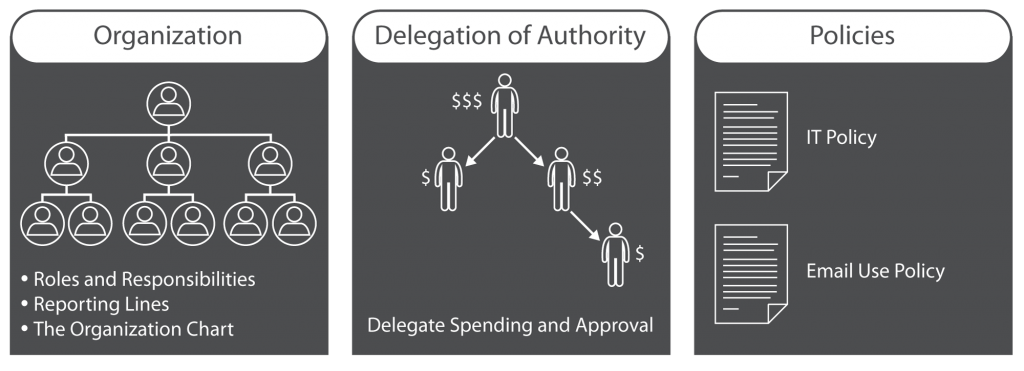
Corporate or company governance is a term that has been trending in recent periods amongst the startup growth circles, and no doubt that good governance is a key ingredient in the formula for sustainable growth. Yet many entrepreneurs (and perhaps even some corporate managers) remain uncertain as to what the term actually means, and what they should be looking for when thinking about the governance of their businesses. The following are 3 major items every entrepreneur should consider when making governance considerations, be it putting together or updating a governance manual, or seeking shareholder or board approvals on authority and systems:

I.The Organization: how the organization should look like and function
The first pillar of governance is identifying how the company is organized and structured, and who is responsible for doing what in the organization. This involves clearly mapping the board and its authority, executive management and their domains, and the reporting lines for every department and division. Entrepreneurs should take extra effort to clearly establish and divide roles and responsibilities to minimize conflicts and delays caused by intersecting spheres. The key elements in building or structuring an organization are:

a.Roles and responsibilities of each management level
b.Clear reporting lines
c.The organization chart

II.Delegation of Authority
The second pillar of governance is mapping where the authority to make decisions and spend company funds reside along the company pyramid. The constitutional documents (articles, memoranda of association, and shareholders’ agreements) delegate authority from the shareholders to one or two levels of higher management. The further flow of delegation should be mapped, ideally in line with the roles and responsibilities of various positions in the organization. The entrepreneur should pay attention to approval and spending authorities, noting that the two can be distinctly managed (example: CTO to approve a purchase, but CTO and CFO to approve the transfer of funds to the seller), and to spending within and outside of the approved business or operating plan.

III.Policies
The final part of a business’s governance is the set of policies and procedures the business follows in carrying out its daily activities. These are very much driven by the operational needs of the business, but some are very common today that every business is expected to have them. These common policies include an IT policy, email use policy, privacy and data maintenance policy, and vehicle use policy. The entrepreneur should assess what are those certain operations that should be carried out uniformly, and develop the set of policies or procedures to ensure that every employee adheres to such methods.